
A thoughtful conversation with therapist, Susan Caso
Supporting teens requires a different kind of parenting — one rooted in trust, patience, and emotional attunement. In this conversation, I’m joined by Susan Caso, who shares her perspective on strengthening the parent-teen connection with care and intention.
Cindy: Hi Susan, I really appreciated the compassionate tone and clarity throughout The Parent-Teen Connection. I especially loved how you emphasized emotional safety and belonging as the foundation of the parent-teen relationship. These themes are especially meaningful for families raising teens with ADHD, where daily interactions can so easily become dominated by reminders, corrections, and worry. What inspired you to write the book?
Susan: I’ve been a therapist working with teens and families for over twenty years, and I’m also a parent of three. From both professional and personal perspectives, I observe the same negative patterns recurring between parents and teens – cycles that often lead to disconnection rather than closeness. I wanted to take what works in my therapy sessions – strategies that truly help families build stronger, healthier relationships—and make them available to more parents, so they can create lasting connections at home.
There are so many barriers to accessing therapy—cost, availability, even stigma—that prevent families from getting the help they need. The Parent-Teen Connection eliminates those barriers and offers tools that are both accessible and effective for every family.
Cindy: What do you hope parents gain from reading your book?
Susan: The intent of the book is to build stronger families, characterized by a deep sense of belonging, healthy communication, and emotional closeness between parents and children.
I use the term Connectedness. That is the feeling of closeness with another who cares and values us. We feel accepted and valued, and we matter. There is an internal warmth and responsiveness in the relationship that feels safe and reassuring. The feeling that someone has our back no matter what.
Teens need that close connection with their parents. It is essential for parents to maintain an emotional connection throughout their children’s entire lives. It’s really about how your kids feel when they are around you. That they can come to you when they are struggling, share how they are feeling, and you be there to comfort, reassure, and support them. When teens feel this from their parents, they’re more open to guidance and boundaries. It’s not about control—it’s about connection.
Research backs this up. Connectedness with at least one parent results in fewer emotional struggles, fewer suicide attempts, less conduct disorder, higher self-esteem, lower rates of violence and substance abuse, and fewer depressive symptoms. The Parent-Teen Connection teaches you how to cultivate this kind of bond.
Cindy: You talk about the difference between the “mom/dad” role and the “parent” role. What’s the distinction, and why does it matter?
Susan: For years, I’ve asked teens what percentage of their interactions with their parents feel positive. Most say around 30%. When I ask what makes up those positive moments, they describe things like going for a walk or bike ride, watching a movie, cooking together, listening to music, or playing a game. These are the times when parents are simply in the “Mom” or “Dad” role—cultivating the relationship, not managing tasks.
When I ask about the other 70%—the interactions they perceive as negative—they describe exchanges that often begin with, “Have you…?”, “When are you going to…?”, or “You need to…”. These moments feel more like management than connection, more like a performance review than a relationship.
It’s important for parents to step back and reflect: Are we spending enough time simply enjoying our kids, laughing, relaxing, experiencing joy together in the Mom/Dad role? Or are we mostly operating from the parent-as-taskmaster role, focused on to-dos, chores, and responsibilities? There’s certainly a place for those necessary conversations, but they can’t define the relationship. Connection must come first.
When ADHD is present, staying in that nurturing “Mom” or “Dad” role can feel even more difficult. Parenting a teen with ADHD often requires frequent reminders, redirection, and correction—whether it’s about finishing homework, staying organized, managing time, or regulating emotions. Over time, these repeated prompts can make daily life feel like an endless performance evaluation, rather than a warm and emotionally connected relationship.
This dynamic takes a toll on both sides. Teens with ADHD may feel criticized, misunderstood, or as if they’re always falling short, which can damage their confidence and motivation. Parents may feel exhausted, frustrated, or discouraged, worried they’re “nagging” instead of nurturing.
Without mindful shifts, the relationship itself can begin to suffer, with less joy, less mutual understanding, and less emotional closeness. That’s why intentional moments of connection—separate from reminders and redirection—are so crucial for families navigating ADHD.
Cindy: I couldn’t agree more. In my Calm and Connected workshop, we emphasize that connection isn’t just a feel-good concept – it’s a key strategy for shifting family dynamics. When parents create those small, consistent moments of closeness, they begin to rebuild trust and open the door to collaboration. It’s not about removing structure, but about leading with relationship.
You use the term “volley” throughout your book. What does this mean, and why is it important?
Susan: When babies are born, we talk about “serve and return” for bonding – the baby cries (serves), the parent responds (returns) – and this back-and-forth builds secure attachment. But this process never stops; it simply changes form as children grow.
With teens, “serve and return” becomes a verbal exchange with feelings. It appears that listening, validating, empathizing, and reassuring – what I call an emotional volley – are essential components. This volley is not only a healthy way to communicate and stay connected, but it also teaches teens vital skills like emotional regulation. When parents respond calmly and thoughtfully to their teen’s emotional “serves,” they model how to manage big feelings and bring comfort, reassurance, and a sense of calm to their child.
This is especially important for teens with ADHD, who often struggle with emotional regulation and impulse control. A steady, responsive parent who notices subtle bids for connection – and returns them with warmth and presence—helps a teen with ADHD feel safe, understood, and grounded.
Over time, this emotional volley builds trust, fosters security, and strengthens the relationship at every stage of development.
Cindy: That image of emotional volleying really stayed with me – it captures the core of what so many parents miss in the rush of daily life. Recognizing those “serves” from our kids, especially when they’re subtle or disguised as attitude or withdrawal, is such a powerful shift.
You also write about the difference between vulnerability and transparency. Can you explain this?
Susan:
Vulnerability is offering up your feelings without knowing how they’ll be received. It involves the risk of rejection, judgment, or shame.
Transparency is openly sharing your inner state in an environment where it’s safe—where acceptance is expected.
For our kids, vulnerability should be a stepping stone to transparency. They shouldn’t have to wonder: Will Mom or Dad freak out if I share this? Will I be judged? They need to know that opening up is safe.
Parents can create this by leaning in when teens hesitate – by gently saying, “You can tell me anything. I want to understand.” This builds a culture of openness where your kids don’t feel like it is risky to share with their parents.
Cindy: Any last takeaways?
Susan: I understand how hard it can be to raise children, especially if you didn’t have a good example growing up. The good news is: you don’t have to be a perfect parent. What truly matters is the connection you build with your child.
Even small shifts – a little more listening, a little less correcting—can make a big difference in the relationship.
And the most important thing to remember? It’s never too late to strengthen, repair, and build a healthy, lasting connection with your kids.
Cindy: Thank you, Susan. This is such an important and encouraging message for parents – and a reminder that connection isn’t just possible, it’s powerful. I’m so glad to share your work with my community.
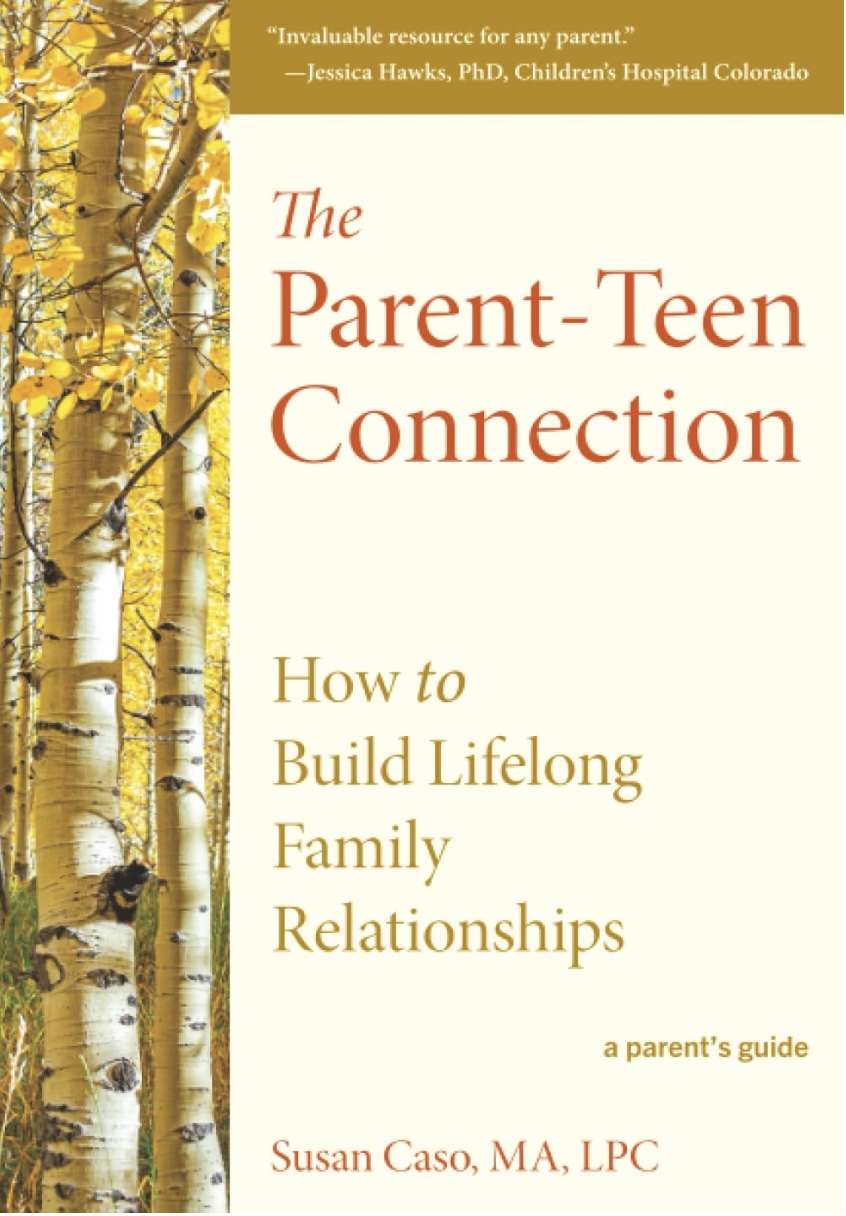
For those interested in diving deeper, I highly recommend: The Parent-Teen Connection: How to Build Lifelong Family Relationships. If you’re raising a teen and finding the balance between guidance and connection challenging, this book offers a grounded, compassionate place to begin.
About Susan Caso
Susan Caso is the author of The Parent-Teen Connection and works with families to strengthen communication, trust, and emotional connection during adolescence. You can learn more about her work at https://susancaso.com.


I really appreciate the distinction Susan makes between the “Mom/Dad” role versus the “parent-as-taskmaster” role, as it perfectly highlights why so many families feel like they’re stuck in a cycle of constant management rather than genuine relationship. To reference a specific point from the article, I found the statistic that teens feel only 30% of their interactions are positive to be a huge wake-up call, especially for those of us navigating the extra “reminders” often needed for ADHD.
Yes Jana. That distinction between being a parent and becoming a taskmaster really does capture why so many families feel stuck in constant management mode. And the statistic about teens experiencing only 30% of interactions as positive is such a powerful wake-up call—especially for families navigating ADHD, where reminders can easily crowd out connection.
This is exactly why I find parent coaching so valuable. When parents have space to slow things down and reflect, they can shift from managing tasks to rebuilding connection—without losing the structure their kids still need.